Most organisations run exercises. Fewer learn much from them.
The pattern is familiar. A scenario is written. The team works through it. Everyone agrees it went well. A report is filed. Twelve months later, the same gaps turn up again.
That is not exercising. That is rehearsal.
Comfortable Exercises Build False Confidence
Exercises often get designed, quietly, to go well. The scenario stays inside the plan. Injects arrive on time, one at a time. Information is complete. Nobody is put on the spot.
Real incidents are not like that. They arrive:
- at the wrong time
- with partial information
- with key people missing
- with more than one thing going wrong
If the exercise never puts the team there, it has not tested what matters.
Start With What You Need to Know
Good exercises start with a question, not a scenario.
- Can the team stand up within an hour, out of hours?
- Does escalation to the executive actually work?
- Can we work with partner agencies whose systems differ from ours?
Objectives should be specific enough to fail.
"Practise the plan" cannot fail. "Issue the first public warning within 30 minutes of activation" can.
Design the Pressure In
Pressure is not chaos. It is designed.
- Injects that conflict with each other.
- Information that is wrong, then corrected.
- A key role-holder removed partway through.
- Media and community pressure that does not wait.
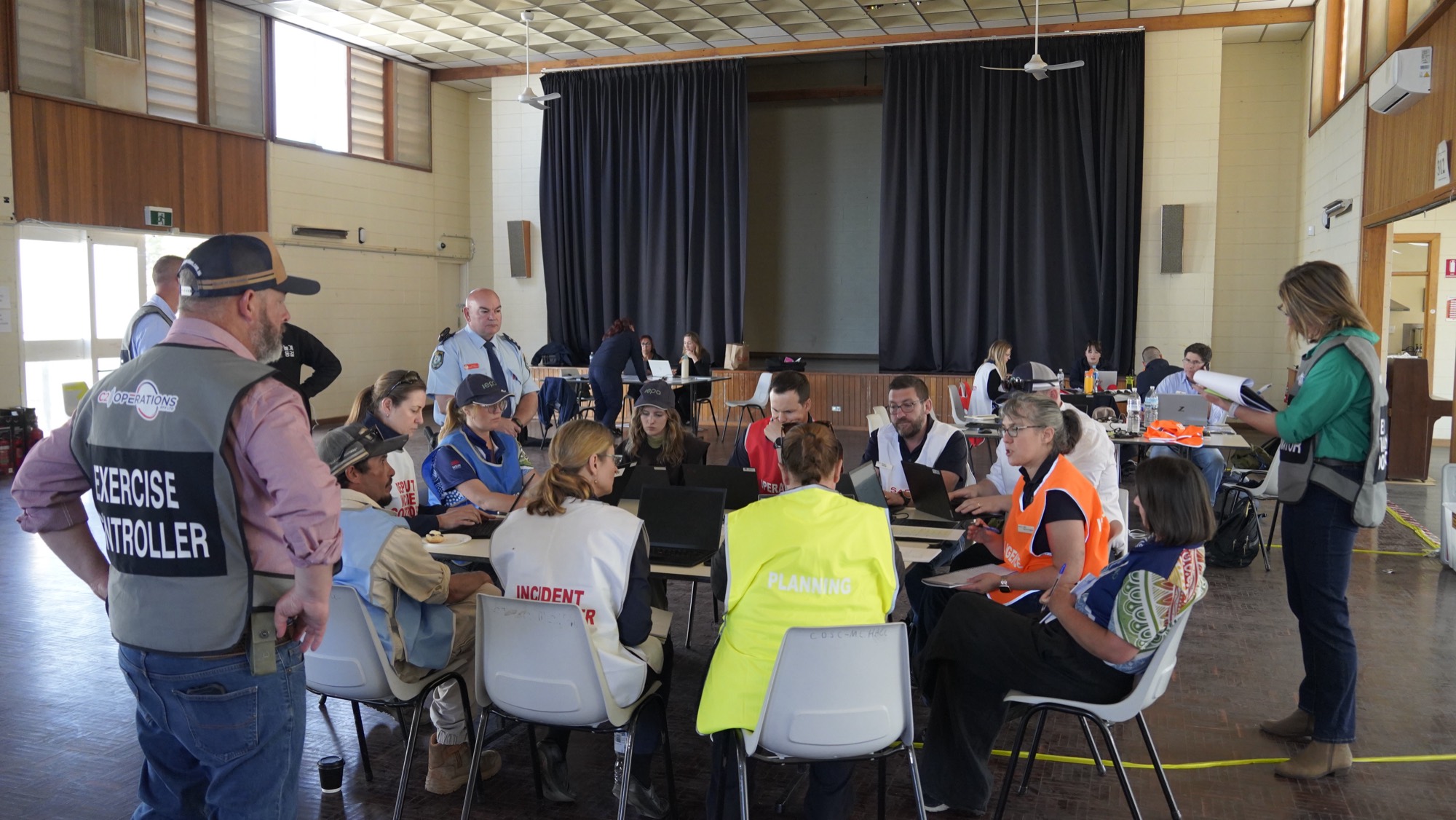
Control staff hold the line. Their job is to keep the exercise on objective, not to rescue the team.
The Debrief Is the Product
The exercise is only the setup. The value is in what gets captured and what changes.
- A hot debrief straight after, while it is fresh.
- A short report that names the gaps plainly.
- An improvement plan with owners and dates.
- A check at the next exercise that those fixes held.
If the same finding appears twice, the exercise programme is not working.
Recent Work
Alongside our partner C2 Operations, we recently helped develop and facilitate an emergency management exercise for a leading NSW Government agency.
Where This Lands
An exercise nobody fails has taught nobody anything.
The aim is not to look ready. It is to find out whether you are, while finding out is still cheap.
Resolve Emergency Management
We design and run exercises that test real capability, then help you fix what they find.
Exercising services