
Every crowd has a working plan, until it doesn't.
Emergency management for festivals, major events, hotels, resorts, and tourism operations where temporary populations, dynamic risk, and high public expectations demand capability that works on the day.

Temporary populations, permanent obligations.
Festivals, sporting events, hotels, resorts, and tourism operations create environments where thousands of people gather in unfamiliar surroundings. They do not know the exits. They do not know the hazards. They do not know the local emergency procedures. And they expect that someone else has sorted all of that out.
Event organisers, venue operators, and accommodation providers carry a duty of care for every person on their site. The emergency management plan that satisfies a local government approval condition is the starting point. The question is whether that plan will actually work when 10,000 people need to move, when severe weather rolls in, or when something happens that nobody predicted.
Something has gone wrong. The crowd does not know what to do. Your staff are looking at each other.
In the first 90 seconds of any incident at a public event or venue, the response is determined by preparation, not improvisation. These are the questions your plan needs to have already answered.
Who makes the call?
Is there a designated incident controller on site right now, not on the roster for next week, but physically present and empowered to make decisions? Do they know they are the decision maker? Does everyone else know?
What is the message?
Your PA operator needs a script. Not a conversation with the event manager about what to say. A pre-written, tested message that matches the scenario. If it takes 60 seconds to agree on wording, you have already lost control of the narrative.
Where do people go?
Evacuation routes need to be signed, lit, and staffed. Assembly areas need to be away from vehicle routes. For a hotel, guests need to know whether to stay in their room or leave the building. Generic 'proceed to the nearest exit' does not work when people do not know where the exits are.
Who is talking to emergency services?
One person. With the address, the access point, the number of people on site, and the nature of the incident. Not three people calling 000 with different information. Not the bar manager trying to explain the layout of a venue they describe differently every time.
What about the people who cannot move?
Wheelchair users, children separated from parents, intoxicated patrons, people having medical episodes. Your plan needs to account for the people who will not respond to a PA announcement. Because there will always be some.
Is this getting bigger or smaller?
Within 90 seconds, your incident controller needs to determine whether the situation is escalating. If it is, the next set of decisions are different. Staged evacuation, shelter in place, area isolation, medical triage. If there is no escalation framework, every decision after this point is reactive.
We build emergency management plans and train teams so that every one of these questions has been answered before the event starts, not during it.
From approval conditions to operational capability.
Every deliverable is built for operators who need plans that satisfy regulators, protect patrons, and work under real conditions.
Event Emergency Management Plans
Comprehensive plans for festivals, concerts, sporting events, and mass gatherings. Designed to meet local government approval conditions and provide a genuine operational framework for incident management on the day.
Onsite EOC Management
We establish and staff Emergency Operations Centres at events, providing real-time situational awareness, decision support for event controllers, and direct liaison with emergency services throughout the event.
Venue & Hotel Emergency Plans
Emergency management plans for hotels, resorts, conference centres, and entertainment venues. Covering fire evacuation, severe weather, medical emergencies, security incidents, and business continuity.
Staff Training & Exercising
Practical training programs for hospitality and event staff who may have no emergency management background. Scenario-based exercises that test the plan and build confidence in decision-making under pressure.
Severe Weather Response
Weather monitoring protocols, trigger-based decision frameworks, and managed response procedures for events and outdoor venues. Including go/no-go decisions, staged shelter procedures, and lightning management.
Compliance & Approval Documentation
Emergency management documentation that meets local government approval conditions, liquor licensing requirements, and insurance obligations. We know what assessors are looking for and we make sure your documentation satisfies those requirements.
Sectors we support
Festivals & Events
Hotels & Resorts
Wineries & Cellar Doors
Short Stay Accommodation
Regional Tourism
Caravan & Holiday Parks
The country that attracts your visitors is the same country that burns.
Margaret River's wineries, Dunsborough and Yallingup's coastal retreats, and the karri forest properties scattered through the South West sit inside some of the most fire-prone country in the state. Visitors arrive without knowledge of local conditions, without understanding of fire danger ratings, and without any plan for what to do if conditions deteriorate.
We build bushfire risk management plans and evacuation procedures specifically for tourism operators. Because the plan for a winery cellar door with 200 visitors on a Saturday is not the same as the plan for a short stay cabin with a family of four who arrived last night and have never seen a bushfire.

Short Stay Accommodation
Airbnb properties, holiday cabins, farm stays, and boutique retreats in bushland settings. Your guests arrive on Friday evening and may not check local conditions once during their stay. They do not know the nearest Neighbourhood Safer Place. They do not know which direction to drive if a fire starts.
Wineries, Breweries & Cellar Doors
Cellar doors in the Adelaide Hills, Margaret River, Yarra Valley, and Hunter Valley sit in some of the highest bushfire risk landscapes in the country. On a busy weekend, a single cellar door may have 200 visitors on site, most of whom drove in on the same single-lane road they will need to drive out on.
Events & Festivals in Fire-Prone Areas
Outdoor music festivals, food and wine events, agricultural shows, and community gatherings in regional areas. These events create temporary high-density populations in locations with limited infrastructure, often during peak fire season. The approval conditions from local government will require a bushfire management plan, but the real question is whether that plan will actually work under pressure.
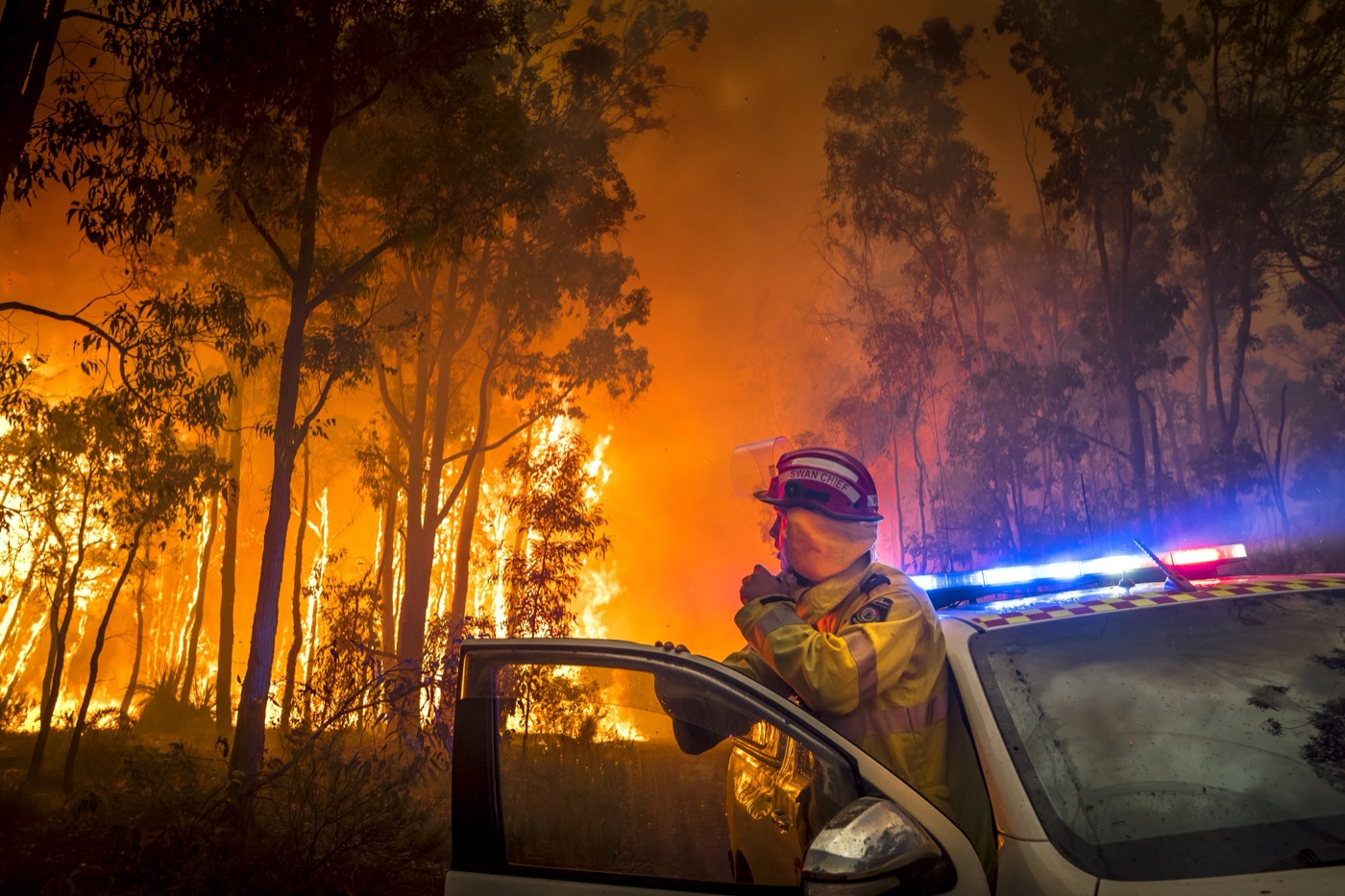
It is 42 degrees. The fire danger rating is Severe. You have guests on site.
Wind changes, single access roads, unfamiliar visitors, communication blackouts, traffic convergence, and buildings designed for aesthetics rather than ember attack. On a Severe day, all of these factors compound simultaneously. Your bushfire risk management plan needs to account for the system, not just the individual line items.
We stand up EOCs at festivals, write bushfire plans for regional venues, and train staff who have never treated fire as a workplace risk.
A single road choked with 300 cars is not an evacuation plan when the fire front is closing in faster than that queue can move.
Closing a venue on a forecast Extreme day costs money. Not closing it, without a tested plan, costs more.
Onsite EOC management
Establishing and staffing emergency operations centres at major events and festivals
Bushfire risk management plans
Site-specific plans for properties in BAL-rated areas and fire-prone regions
Evacuation planning
Managed egress procedures for single-access venues with high patron counts
Weather monitoring protocols
Trigger-based decision frameworks linked to FDI, wind change, and warning levels
Staff and warden training
Practical training for front-of-house, cellar door, and accommodation staff
Compliance documentation
Plans that meet local government approval conditions and insurance requirements
Guest notification systems
Communication plans for notifying guests who may not be monitoring conditions
Shelter in place assessment
Building suitability assessment for last-resort shelter during ember attack
"We didn't think it would happen here" has never been a good answer.
Did you have a plan? Were your people trained? And had you actually tested it before the day it mattered?
Legal and insurance exposure
Event organisers and tourism operators carry a duty of care for every person on their site. Insurers are increasingly requiring evidence of emergency preparedness as a condition of cover. Local governments are attaching emergency management plan requirements to event approvals. Without a current, tested plan, your legal and insurance position is compromised before anything has even gone wrong.
Fire season is getting longer
Fire seasons are starting earlier and running later. Peak tourism periods increasingly overlap with peak fire danger periods. The window where bushfire risk is irrelevant to your operation is shrinking every year.
Patron and guest expectations
Guests expect that the event, accommodation, or venue they are attending has a plan for their safety. When something goes wrong, the first question is whether the operator took reasonable steps. A plan that was never communicated to staff is barely better than no plan at all.
Reputation and business continuity
A poorly managed incident at an event or venue does not just affect the people involved. It affects every future booking, every future approval application, and the long-term viability of the operation. The investment in proper emergency management is not about ticking a box. It is about protecting people, protecting your brand, and making sure you are still operating next season.
From risk assessment to event-day ready.
Whether you need an emergency management plan for a one-off event, bushfire risk management for a regional tourism operation, or ongoing EOC capability for a festival series, the process starts with understanding your actual risk.
Understand the risk profile of your operation
Understand the risk profile of your operation
Build plans that work under real conditions
Build plans that work under real conditions
Train your people and test your systems
Train your people and test your systems
Operational support when it counts
Operational support when it counts
Your next event, your next season, your next approval. Get the plan right before it matters.
Whether you run a festival, a cellar door, a holiday rental, or a resort, talk to us about building emergency management capability that protects your patrons, your staff, and your operation.